Project execution
The Lights Are On. Can the Building Support Your Next Use?
For an Atlantic City development, existing utility connections are a starting point. Confirm demand, service requirements and delivery milestones before committing to the next use.
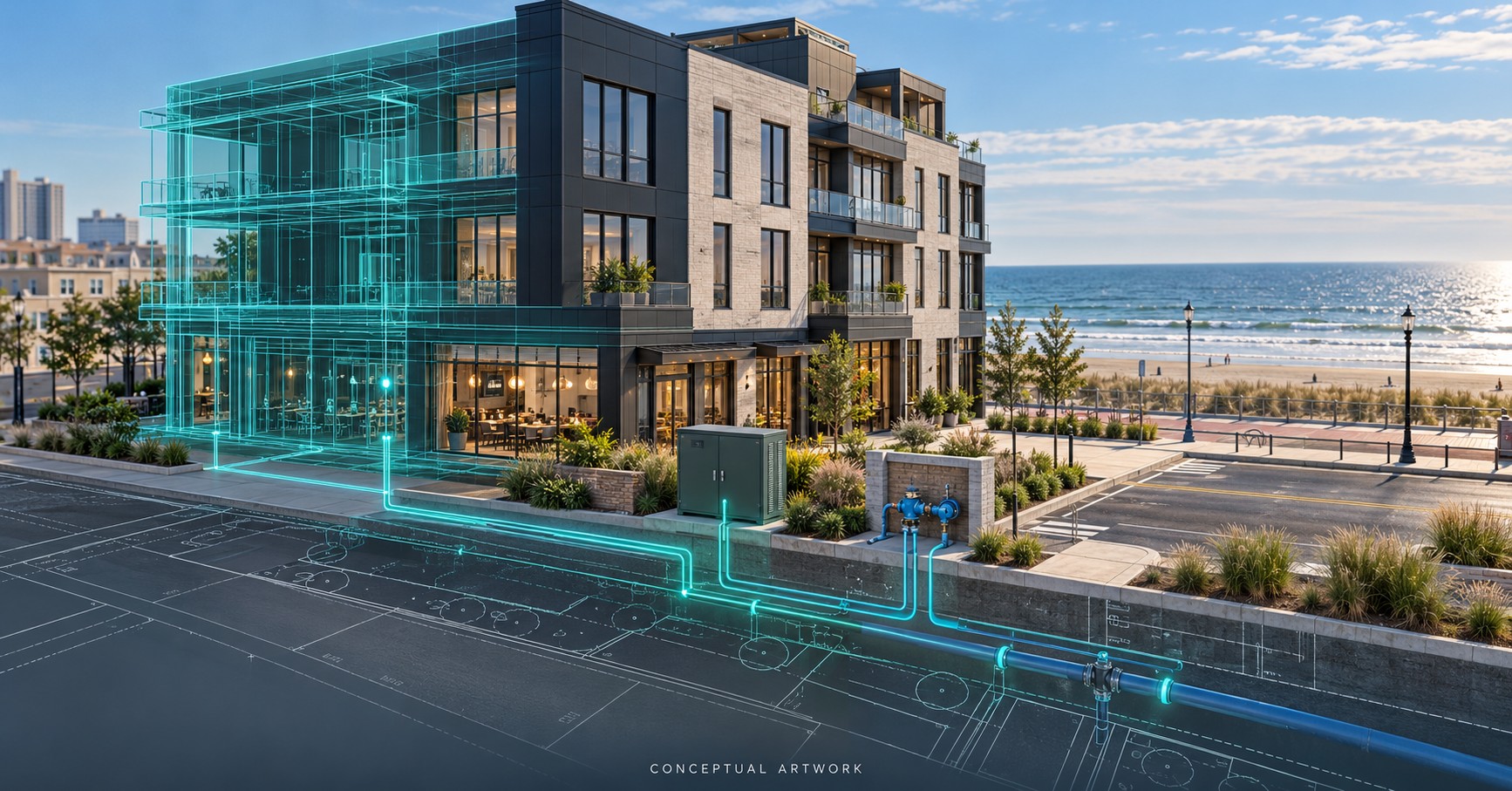
A working light switch answers one question.
It tells you the building has power today. It does not establish that the service will support tomorrow’s apartments, restaurant, larger cooling system or charging equipment. For an Atlantic City property owner, that distinction belongs near the beginning of the development conversation. An existing connection is useful evidence. The next step is to test it against the actual proposed use, before the budget and opening date depend on it.
1. Describe what the building will need.
Start with a practical operating brief: intended uses, expected occupancy, major equipment, tenant responsibilities and any phased opening. Ask the appropriate engineers to translate that brief into preliminary electrical and water demand, with assumptions clearly marked. Collect available service records and drawings, and have existing conditions verified. If a commercial tenant is still unknown, define the use being evaluated and identify which equipment choices could change the result. “Future retail” alone leaves too much unresolved.
2. Start the right utility conversation.
A request to turn an account on is different from a request to assess new or modified service. Atlantic City Electric’s construction and remodeling guidance directs contractors, builders and customers to its Service Installation & Upgrades Portal for new or upgraded service. Have the design team establish what the project needs and what information the utility needs to evaluate it. Keep the request number, submitted scope, named contact and outstanding questions together. A submitted request should be tracked as a request until the applicable review has produced a documented answer.
3. Give water its own review.
Do not let a power conversation stand in for a water assessment. Ask the plumbing and fire-protection professionals to identify the information needed to assess the proposed demand and any fire-service implications. Atlantic City Municipal Utilities Authority’s forms page separately lists commercial service agreements, meter purchases and meter-size changes. Those resources are a starting point for asking ACMUA which process fits the property; submitting an account form does not itself establish that a new use is supported. Track wastewater and other relevant services separately with the responsible providers and project professionals.
4. Connect equipment purchases to confirmed requirements.
An early equipment order can become a problem if it assumes a service arrangement that later changes. Atlantic City Electric’s service-request guidance tells customers to wait for project-plan approval before purchasing electrical equipment and then use its approved products list. Put that decision into the procurement schedule. Ask the project team to confirm the requirements affecting each purchase and identify who can authorize release. Also reserve the space and access that service equipment needs, with locations coordinated through the design and utility review.
5. Turn the utility response into a delivery plan.
Ask the team to distinguish what the utility will do from what the owner and contractors must complete. Track design decisions, required agreements, payments, site preparation, inspections and the service connection as applicable to the actual scope. Identify temporary construction service separately from the permanent service needed for building operations. Request current, project-specific timing instead of borrowing a lead time from another job. A useful status line reads: “Permanent service: awaiting the identified design decision; owner responsible for the next submission; timing to be reconfirmed after review.” It makes the dependency visible without inventing a completion date.
Try it on a hypothetical storefront.
Imagine a property owner leasing a former shop to a food operator. The rooms may look suitable, but the tenant’s cooking, refrigeration, hot-water and ventilation choices still need to reach the design team. Before the lease commitments and fit-out purchases rely on a particular opening date, organize a review of the proposed equipment and services. If the requirements change, update the scope and timing assumptions together. This is an illustrative planning scenario, not an available property or an Iron Tide project.
Use one record to make the next decision.
Keep a short utility record for each service: existing information, proposed demand, current request, response received, unresolved condition, responsible person and next milestone. Ask which findings could change the layout, budget or opening plan. Use those findings to decide whether to proceed, revise the concept or investigate further. Iron Tide’s role is to help organize that coordination; the utility and qualified professionals make the technical determinations. The goal is to give the owner a clear basis for the next commitment.
Practical takeaways
- Have qualified designers compare the proposed demand with the documented existing service.
- Give utilities a defined scope and record the assumptions behind their responses.
- Resolve service and equipment requirements before releasing affected purchases.
- Track permanent service, temporary service and owner-side work as separate milestones.
- Update the utility review when tenant requirements or project phasing change.
Planning a new use or a larger project in Atlantic City?
Iron Tide helps developers and property owners organize utility questions, coordinate local conversations and connect specialist findings to the project plan. Tell us about your property, proposed use and target timing.
Start a conversation ↗